Category

waveCHECK

From Templates to Traceability: Why Leading Edge Profile Inspection Is Going Digital

By Newsroom, Press, profileCHECK, waveCHECK

Wind turbine blades have grown dramatically over the past decade, and they show no sign of slowing down. Longer blades mean more surface area, more aerodynamic sensitivity, and less room for error at the leading edge. Yet across much of the industry, the tool used to check that leading edge profile hasn’t changed much at all: a manual gauge or template, held up against the blade by hand.

That mismatch, blades growing larger and more aerodynamically sensitive while the inspection method stays exactly the same, is becoming harder to ignore.
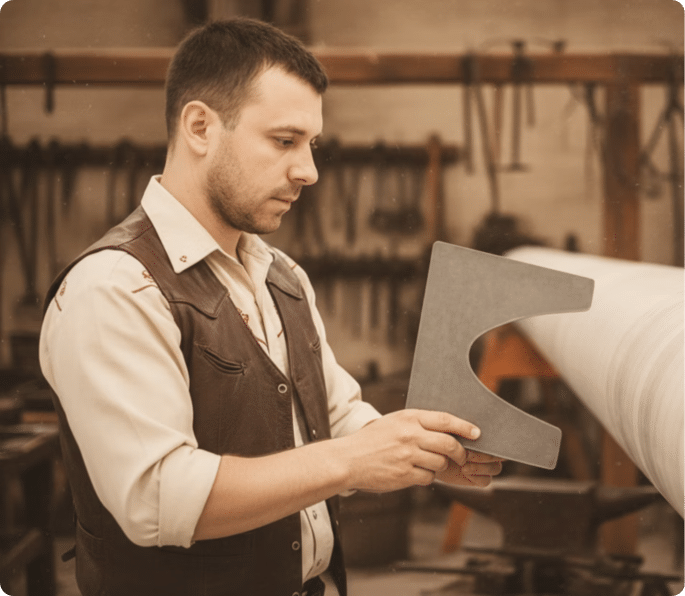
Before advanced digital solutions, inspecting blade profiles often involved the usage of profile templates.

The Problem With Manual Profile Checks

Manual gauges and templates have been the accepted standard for a long time, largely because nothing better was available. They tell an operator whether a section of the blade looks close enough to the intended shape, but the result depends heavily on who’s holding the tool, how it’s positioned, and how much pressure is applied. Two experienced technicians checking the same section of blade can walk away with two different read outs, and neither one produces a record that holds up later.

That variability used to be tolerable. Tolerances were looser, and blades were shorter, so small deviations at the leading edge had less impact on aerodynamic performance. Neither of those conditions holds anymore. As blades scale up and OEMs push for tighter aerodynamic accuracy, the margin for subjective measurement keeps shrinking, and manual methods aren’t built to keep pace.

There’s also a documentation problem. A manual check produces a pass or fail judgment, not a dataset. When a quality manager needs to prove conformity to a customer, defend a decision during an audit, or investigate a field issue months later, “the technician said it looked fine” isn’t a record anyone can stand behind.

What Changes With Digital Optical Inspection

Digital and optical inspection tools, like 8tree’s profileCHECK, remove the guesswork by replacing manual comparison with a direct measurement against the design itself. The system optically scans the blade’s profile and compares it to the CAD-based nominal model in real time, producing a color-coded visualization of any deviation along with automated annotations that flag exactly where and by how much the actual surface diverges from the intended geometry.

The result isn’t just a faster inspection. It’s a fundamentally different kind of output. Instead of a subjective judgement call, you get a documented, repeatable measurement that doesn’t change depending on who’s running the scan.
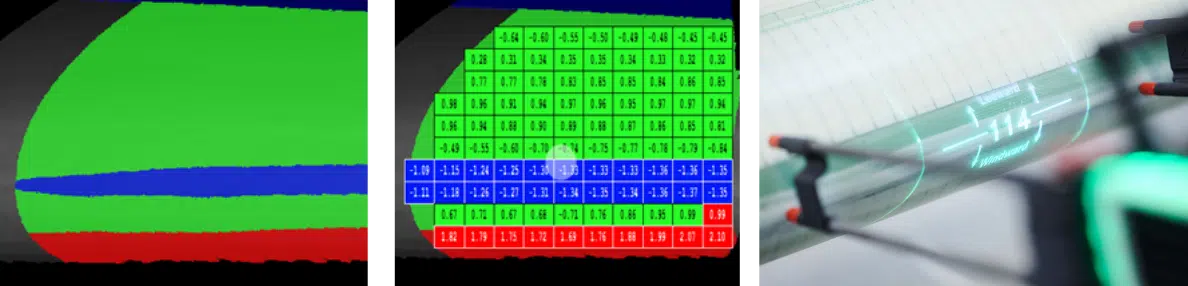
Why Traceability Is the Real Story

Speed matters, but traceability is what actually changes the conversation with customers, auditors, and internal quality teams. A digital record of leading edge conformity supports quality gate documentation on its own terms. It gives engineering, production, and external stakeholders a shared reference point instead of three different opinions about what was seen on the shop floor.

That matters even more as quality processes become more rigorous. Frameworks such as APQP4Wind require manufacturers to establish robust, traceable, and repeatable inspection processes, and to provide quality data that can be consistently reviewed and verified. Digital inspection data is built for exactly that kind of scrutiny.
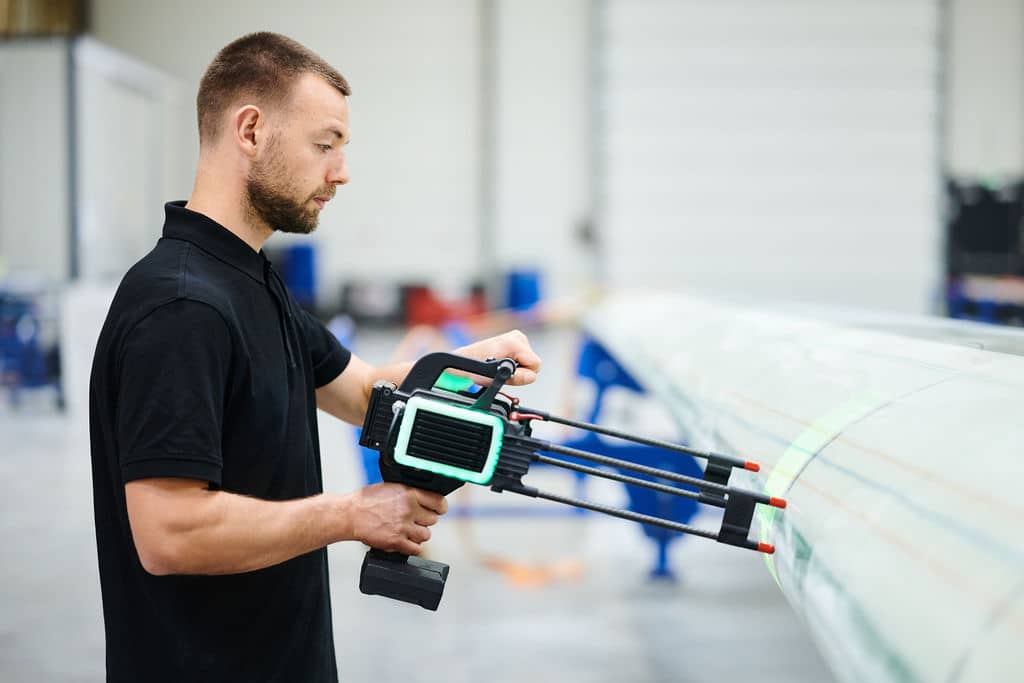
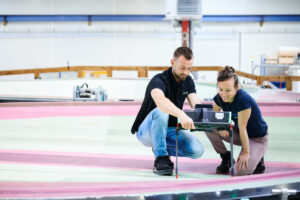
profileCHECK can be used directly on the blade surface to inspect and analyze its edge profile.

Where This Is Heading

Leading edge profile inspection isn’t an isolated case. It’s part of a broader shift already underway across composite blade manufacturing, from wrinkle detection to bond line inspection, where subjective manual methods are giving way to digital tools that produce defensible data. The manufacturers moving on this now aren’t just solving today’s quality gate problem. They’re building the inspection infrastructure that tighter tolerances and stricter certification requirements will demand as blades continue to scale.

The question worth asking isn’t whether digital inspection will become standard for leading edge profile checks. It’s how long a manufacturer can rely on a template and a trained eye before that gap becomes a liability they can’t explain away.

Want to see how profileCHECK compares to manual gauging on your own blade profile?

Book a demo to see the deviation analysis in action.

Why Wrinkles in Wind Turbine Blades Matter: Causes, Risks, and Prevention

By Newsroom, Press, waveCHECK

Wind turbine blades are primarily manufactured from fiber-reinforced composites (FRP). While this material is lightweight and strong, it is prone to local manufacturing defects, including waviness and wrinkles in the laminate.

Even small wrinkles can significantly reduce structural integrity and ultimately lead to costly repairs or premature blade failure. With the growing emphasis on blade quality at delivery and an increasing number of warranty claims which cost manufacturers and operators millions of dollars, the pressure to identify and prevent wrinkles has never been greater.

Primary Causes of Wrinkles in Wind Blades

1. Material Draping & Layup Errors
During manual layup, even slight misalignments can leave fibers uneven. When resin cures, these imperfections form permanent wrinkles. Complex shapes such as edges, radii, and transitions are particularly prone to misaligned fiber placement.

2. Vacuum Infusion & Resin Flow
Vacuum infusion requires consistent pressure. Poor vacuum bagging or bridging can prevent full compaction, allowing fibers to lift and form waves. Uneven resin flow may also shift fibers, creating localized thickness variations and wrinkling.

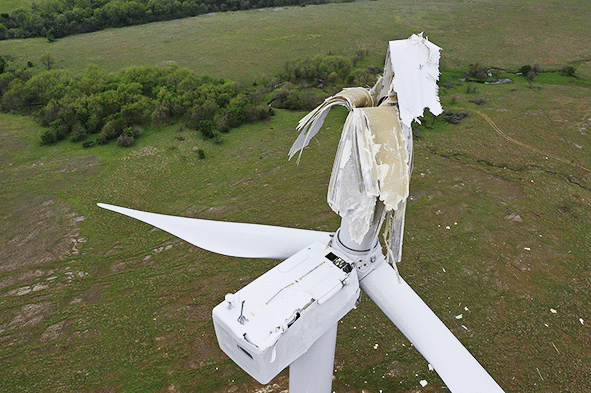
A picture of blade failure when the wrinkles are left untreated

3. Core Material Gaps
Sandwich blade structures often use polymer foam or balsa wood cores. Gaps or misfits between core pieces can create misalignments of the fibers layed-up. After curing, these irregularities manifest as laminate undulations, and local laminate waviness.

4. Thermal Effects
During curing, resins undergo an exothermic reaction, generating heat. If temperature control is poor, uneven expansion or shrinkage can distort the laminate. Localized hot spots can amplify the risk of wrinkle formation.

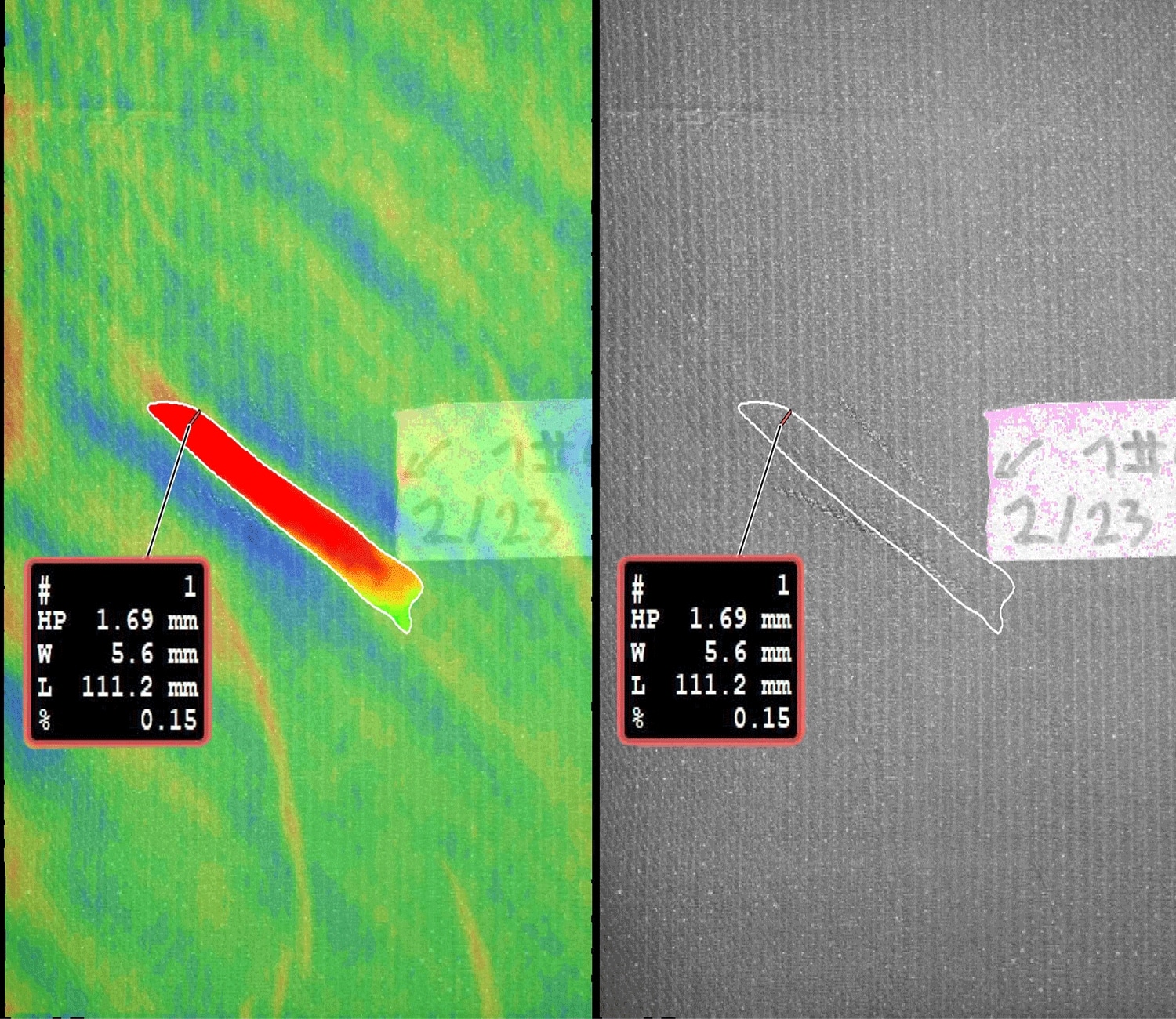
Extract of a wrinkle inspection report the blade surface

Why Wrinkles Are Dangerous

Fibers in composites achieve their highest strength when perfectly aligned in straight lines. Wrinkles bend or misdirect the stress flow, introducing out-of-plane stresses. This reduces the load-carrying capacity, accelerates fatigue, and increases the risk of delamination or sudden fracture.

Prevention and Detection

Reducing the occurrence of wrinkles requires both process control and inspection discipline.

Prevention best practices include:

  • Ensuring proper fabric layup techniques
  • Maintaining adequate compaction and bagging procedures
  • Reducing gaps in core materials
  • Carefully managing resin flow and cure temperature


Detection methods include:

  • Non-destructive testing (NDT) such as ultrasound and thermography
  • Digital 3D inspection tools such as 8tree’s waveCHECK, which provides instant, repeatable wrinkle and surface quality measurements

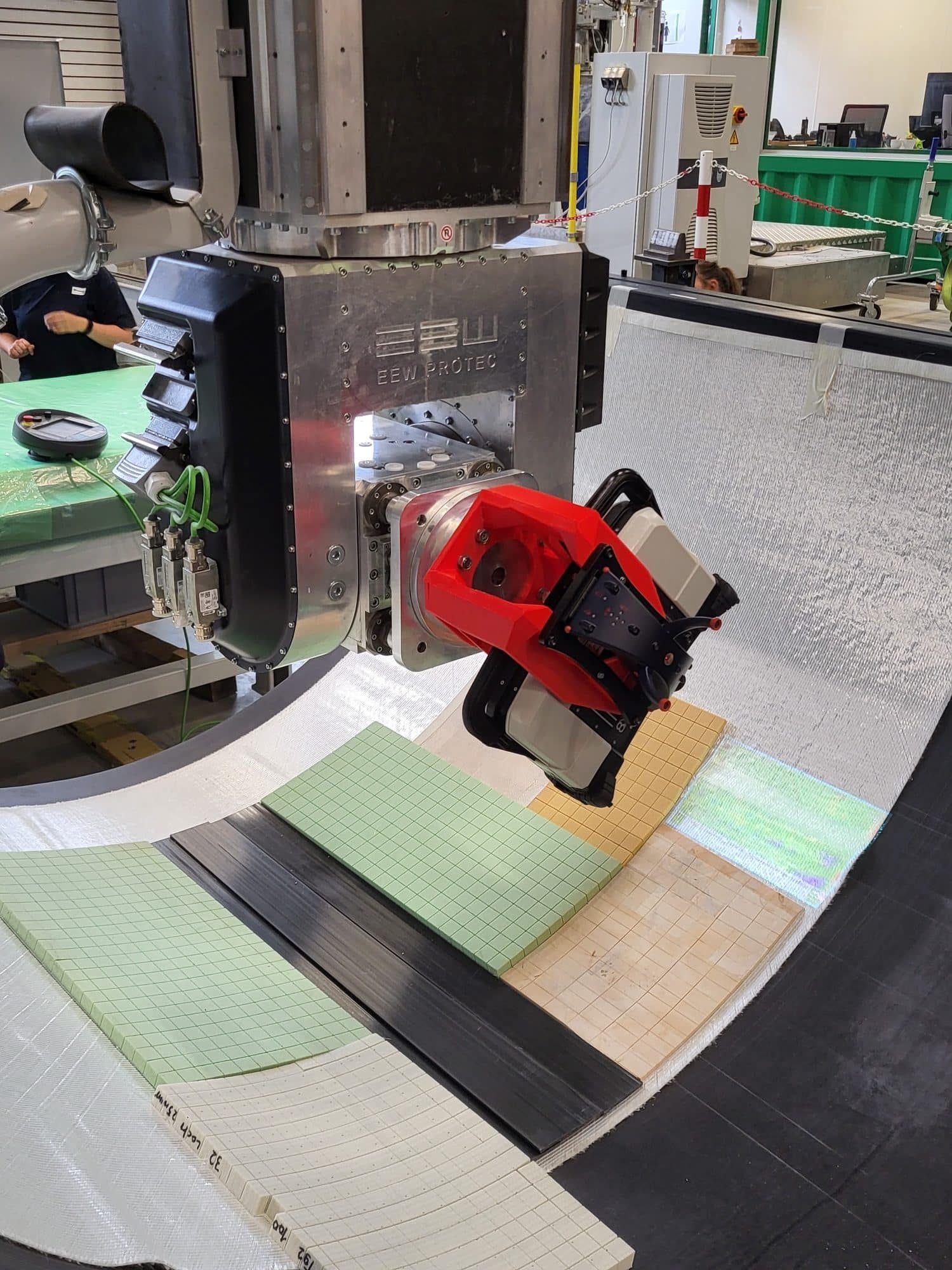
waveCHECK can be used directly on the blade surface to inspect and analyze surface defects such as wrinkles and waviness

Conclusion

Wrinkles in wind turbine blades are not just cosmetic issues because they pose serious risks to structural integrity and long-term blade performance. By understanding the causes, recognizing the risks, and implementing robust prevention and detection techniques, manufacturers and operators can protect turbine reliability while minimizing costly warranty claims and repairs.

White paper:
inspection technologies

Learn more about the possibilities and limitations of different inspection methods in the quality control of wind turbine rotor blades.

Download White Paper

Brochure

Learn more about precision wrinkle analysis with real-time instant visual feedback.

Download Brochure

8tree partners with leading Research Consortium to enhance automated Wind Blade Quality Inspection with waveCHECK®

By Newsroom, Press, waveCHECK

Partnering with the Fraunhofer Institute for Wind Energy Systems (IWES), 8tree aims to revolutionize wind blade quality inspection through next-level digitalization and automation. 

CONSTANCE, GERMANY, SEPTEMBER 27, 2023  

8tree, a global industry leader in 3D surface inspection tools, is proud to announce its collaboration in the “SmartRoMaIn” project led by the renowned Fraunhofer Institute for Wind Energy Systems (IWES). This initiative aims to revolutionize wind blade production by introducing a connected measurement system that detects and rectifies construction deviations early in the manufacturing process. 

“Participating in the SmartRoMaIn project aligns seamlessly with 8tree’s commitment to delivering industry-specific 3D inspection solutions. We are thrilled to join forces with IWES and the other project partners, and look forward to contributing our expertise to enhance the production quality and efficiency of wind turbine rotor blades,” commented Erik Klaas, co-founder and CTO of 8tree. 

Despite high safety margins in rotor blade production, critical construction deviations can arise during manufacturing, leading to expensive post-production adjustments. If these deviations go unnoticed, they can result in operational damages to the blades.  

The “SmartRoMaIn” project aims to tackle this challenge head-on by developing a networked measurement system that promptly identifies and corrects these deviations. 

Generously funded by the German Federal Ministry for Economic Affairs and Climate Action (BMWK) with a grant totaling over 1.75 million euros, the project is set to run until December 2025.  

8tree collaborates in this initiative with partners from special machinery manufacturing, laser application technologies, robotics, and digital solutions sectors. Furthermore, Wind Turbine OEMs Nordex and Vensys have joined as associated partners, underscoring the broad industry collaboration and dedication to enhancing wind blade quality inspection. 

About 8tree
8tree tools, technology and services boost your production quality with precision 3D measurement that is as simple as taking a photo.  
With built-in AR, 8tree’s tools empower operators of every skill-level to achieve accurate, consistent, and actionable inspection results within seconds.   

For more information, visit 8-tree.com. 
For recent news follow 8tree on LinkedIn. 

About Fraunhofer
About Fraunhofer IWES
About SmartRoMain 

Download Press Release as PDF
Download Press-Kit

Inspection of Wind Turbine Rotor Blade with waveCHECK

8tree Contracts DNV to Certify waveCHECK™

By Insights, Newsroom, Press, waveCHECK

waveCHECK – 8tree’s latest innovation for rotor blade inspection in the wind industry gets certified according to DNVs standard for wind turbine rotor blades (DNVGL-ST-0376).

This press release was published on PRWeb.

One year after formally introducing waveCHECK into the wind industry, 8tree has engaged DNV for the product’s certification according to established industry standards.

“During the past swaveCHECK in use in wind turbine rotor blade manufacturingeveral years we have learned from stakeholders and experts in the wind industry, that waves and wrinkles in the load-carrying composite structure of wind turbine rotor blades are a critical problem,” said Erik Klaas, 8tree’s CTO. “The accurate and objective evaluation of waves and wrinkles helps blade producers build higher quality blades and reduce the risk of failure during operation. As the industry’s interest in waveCHECK continues to grow, we believe that obtaining DNV certification will be an important milestone on our journey to enabling the renewable energy market.”

“The improvement of quality and reliability of rotor blades is an important topic in the wind industry and we are happy to see that new technologies that support wind turbine blade manufactures are entering the market,” said Ramakrishna Parasarampuram, Head of Section Rotor Blades at DNV. “Certification of 8tree’s waveCHECK will include assessment of the system’s hardware, software as well as the scanning process itself and its boundaries.”


About 8tree

“We make precision 3D measurement as simple as taking a photo.”

With this vision in mind, 8tree makes 3D optical surface inspection tools that solve chronic problems for multiple industries. 8tree’s products empower every operator – from mechanics on the floor, to engineers in the lab – with instantly actionable precise measurements, portability and performance. With its patented user-centric product design, instant ‘go/no-go’ answers and zero-learning curve, 8tree is committed to making precision 3D scanning more broadly accessible – technically and commercially.

For recent news follow 8tree on LinkedIn, LinkedIn.


waveCHECK is a first-of-its-kind solution for end-to-end digital analysis of composite waviness. It empowers manufacturing teams to quantify composite waviness with unprecedented precision and repeatability.
waveCHECK detects and displays

  • Positive, Negative and Step waves & wrinkles
  • Highest point; shortest distance to edge, in main fiber direction
  • Aspect ratio
  • Angle of wave with respect to main fiber direction
  • Works on carbon fiber and glass fiber surfaces

Learn more about waveCHECK by watching this short presentation video.


Surface Inspection Technologies for Wind Turbine Rotor Blades – White Paper

By Insights, waveCHECK

Quality control of wind turbine rotor blades is complex and requires consideration of various aspects. Different inspection technologies are available. However, not every inspection technology is equally suitable for all aspects of wind blade quality.

This white paper outlines and explores the possibilities and limitations of different inspection methods:

  • Thermography
  • Shearography
  • Ultrasonic Testing (UT)
  • Expert Inspection
  • Optical Surface Inspection
  • Trends

8tree’s Research & Development Center in Germany is now ISO9001 certified

By 03_INDUSTRY VOICE, dentCHECK, fastCHECK, Newsroom, Press, waveCHECK

“Every crisis presents an opportunity. Although the aviation sector – one of 8tree’s core markets – was adversely impacted by the COVID-19, our intention was to emerge stronger coming out of the crisis. The ISO9001 certification sends a clear message to our customers and stakeholders saying ‘8tree is still here – stronger than ever,’” says Erik Klaas, 8tree’s CTO.

8tree performs R&D, product design and manufacturing in Constance, Germany. ISO9001 certification for this site took effect on March 19th 2021.

“Alongside the adoption of 8tree’s products by major OEMs, airlines and MROs like Airbus, Delta, SIAEC and Lufthansa Technik, the independent ISO9001 certification marks another significant milestone for us. The certification emphasizes that 8tree’s products are developed and manufactured under highest quality standards,” says Arun Chhabra, 8tree’s CEO.

Original Press Release
German Version

LinkedIn Publication

Erik Klaas, CTO, 8tree and Pia Böttcher, VP Operations, 8tree with the ISO9001 certificate.

Erik Klaas, CTO, 8tree and Pia Böttcher, VP Operations, 8tree with the ISO9001 certificate.

Wind Turbine Blade Professional Johannes G. Leib joins 8tree

By Newsroom, Press, waveCHECK

8tree is excited to announce the addition of Johannes Georg Leib to its Business Development team. Prior to this new assignment, Johannes spent more than a decade in the wind-blade industry, applying his technical expertise and building his domain depth as Global Technical Program Manager at TPI Composites, as well as Project Manager & Senior Engineer at DNV GL. Learn more.


German Version of Press Release

8tree enters renewables sector with waveCHECK™, targeting wind turbine blade quality

By Newsroom, Press, waveCHECK

Following the growing success of its dentCHECK tool within the aerospace and aviation sectors, 8tree is pleased to announce the launch of its newest product – waveCHECK – a 3D inspection tool designed specifically for the needs of inspecting wind-turbine blades during and after production. Learn more.

8tree enters renewables sector

8tree enters renewables sector with waveCHECK™, targeting wind turbine blade quality

German Version of Press Release